Mastering Gritty Textures with Credit Card Paint Scrape Brushes 3
In the realm of digital design, texture is often the subtle element that separates a flat composition from one that feels tactile and grounded. Designers frequently seek tools that can replicate the organic imperfections of traditional media without the mess or unpredictability of physical materials. Credit Card Paint Scrape Brushes 3 emerges as a specialized solution in this niche, offering a curated set of digital assets designed to mimic the distinct visual effect of paint being dragged across a surface with a rigid edge. This collection is not merely a bundle of generic grunge overlays; it is a focused toolkit for creators who need precise control over smeared, scraped, and layered aesthetic elements.
For professionals ranging from graphic designers and illustrators to marketing specialists and content creators, understanding the utility of such specific brush sets can significantly streamline workflow. This article evaluates the features, practical applications, and overall value of Credit Card Paint Scrape Brushes 3, providing an objective look at how it fits into modern creative processes.
Understanding the Tool and Its Core Components
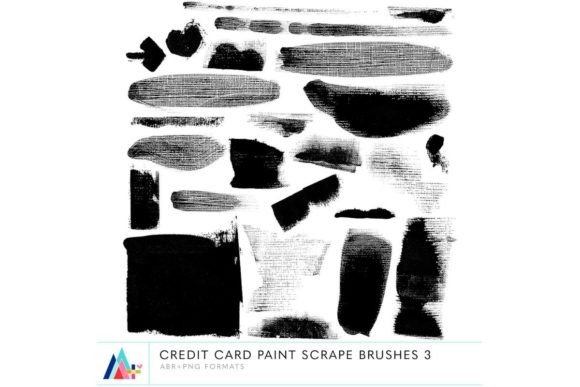
At its foundation, Credit Card Paint Scrape Brushes 3 is a handy collection of Photoshop brushes intended to enhance digital artwork with realistic, hand-made textures. The package includes two primary file formats to ensure compatibility and flexibility: high-resolution PNG elements and a native .ABR Photoshop brush file. Specifically, users receive 25 assorted paint scraped and smeared credit card brushes, all rendered at 300 dpi. This resolution is critical for professional print work, ensuring that the textures remain crisp and detailed even when scaled for large-format outputs like posters or packaging.
The concept behind these brushes is rooted in a common traditional art technique. Artists often use old credit cards, gift cards, or similar plastic tools to scrape wet paint across canvas or paper, creating unique ridges, thin lines, and opaque blocks of color. Replicating this effect digitally requires more than just a standard round brush with lowered opacity. It demands a stamp or tip shape that captures the irregular edges, varying thickness, and sudden stops characteristic of a physical scrape. This collection aims to digitize that specific mechanical action, allowing users to apply these complex textures with a single click or stroke.
Key Characteristics and Technical Quality
The quality of any digital brush set is determined by its resolution, transparency handling, and ease of integration. Credit Card Paint Scrape Brushes 3 performs well in these areas. The inclusion of 300 dpi .PNG files is a significant advantage. These transparent background elements allow designers to drag and drop textures directly into any software that supports layers, not just Adobe Photoshop. This makes the tool versatile for users of Procreate, Affinity Photo, or even web-based editors like Canva, provided they can import PNGs.
The .ABR file, meanwhile, offers dynamic control within Photoshop. Users can adjust the size, angle, and opacity of each brush stroke in real-time. This interactivity is crucial for maintaining a natural look. If every scrape looked identical, the design would appear repetitive and artificial. The variety within the 25 brushes ensures that no two strokes need to look the same. Some brushes mimic long, sweeping drags, while others capture short, abrupt smears or thick accumulations of "paint" at the end of a stroke. This variation helps maintain visual interest and realism in complex compositions.
Practical Applications in Professional Design
The utility of Credit Card Paint Scrape Brushes 3 extends across various industries and project types. Its primary strength lies in adding depth and character to otherwise clean digital layouts. Here are several scenarios where these brushes prove particularly effective:
- Branding and Identity: For brands aiming for an artisanal, rugged, or handmade aesthetic, these textures can be used to create unique logo backgrounds or business card designs. The scraped effect conveys a sense of human touch and authenticity.
- Album Art and Poster Design: Musicians and event promoters often seek gritty, energetic visuals. Layering these scrapes over typography or photography can add movement and intensity, breaking up static images and drawing the viewer’s eye.
- Social Media Content: Marketers and influencers can use these elements to create eye-catching overlays for Instagram stories or YouTube thumbnails. A subtle smear behind text can improve readability while adding stylistic flair.
- Digital Painting and Illustration: Concept artists and illustrators can use these brushes to quickly block in shapes or add realistic wear and tear to objects. For example, simulating peeling paint on a wall or oil stains on machinery becomes faster and more convincing with pre-made scrape textures.
The effectiveness of these brushes lies in their ability to save time. Creating realistic paint scrapes from scratch using standard tools requires significant skill and trial and error. With Credit Card Paint Scrape Brushes 3, the foundational texture is already established, allowing the artist to focus on composition, color theory, and lighting.
Usability and Workflow Integration
From a usability standpoint, the collection is straightforward. Installing the .ABR file is a simple process for any Photoshop user, and the brushes appear immediately in the brush panel. The learning curve is minimal; however, mastering the tool requires an understanding of layer blending modes. To achieve the most realistic results, users should experiment with modes like Multiply, Overlay, or Soft Light, depending on the underlying image and the desired intensity of the texture.
One notable aspect of this tool is its consistency. Because the brushes are hand-made and digitized at high resolution, they offer a reliable standard of quality. Unlike procedural generators that can sometimes produce unpredictable or messy results, these brushes provide a controlled outcome. This reliability is essential for professional workflows where deadlines are tight and client expectations are high. Designers can trust that the brush will perform as expected, reducing the need for extensive post-processing or cleanup.
Who Benefits Most from This Collection?
While any digital creator might find value in texture brushes, Credit Card Paint Scrape Brushes 3 is particularly suited for specific audiences:
- Graphic Designers: Those working on editorial design, packaging, or advertising will appreciate the quick access to high-quality grunge elements that can elevate a layout.
- Digital Artists: Illustrators who blend traditional and digital techniques will find these brushes helpful for adding organic imperfections to their work.
- Small Business Owners and Entrepreneurs: Individuals managing their own brand identity can use these tools to create professional-looking marketing materials without hiring a designer for every small task.
- Educators and Students: Teaching resources often benefit from visual aids that demonstrate texture and layering. These brushes can serve as excellent examples for students learning about digital painting techniques.
Hobbyists and serious enthusiasts will also find this collection accessible. The intuitive nature of the brushes allows beginners to achieve professional-looking results quickly, fostering confidence and encouraging further exploration of digital texturing techniques.
Limitations and Considerations
Despite its strengths, it is important to acknowledge the limitations of Credit Card Paint Scrape Brushes 3. As a specialized tool, it is not a universal solution for all texturing needs. It specifically replicates the credit card scrape effect; it does not provide watercolor bleeds, charcoal dust, or ink splatters. Designers requiring a broader range of traditional media simulations may need to supplement this collection with other brush sets.
Additionally, while the 300 dpi resolution is excellent for print, users working on extremely large-scale projects, such as billboards, may need to test the scalability carefully. Although the PNGs are high quality, raster-based textures can lose sharpness if enlarged beyond their original dimensions. Smart object conversion in Photoshop can mitigate this to some extent, but it is a factor to consider during project planning.
Furthermore, the effectiveness of these brushes depends heavily on the user’s ability to integrate them seamlessly. Simply slapping a texture onto an image without adjusting color, opacity, or blending mode can result in a disjointed and amateurish appearance. The tool provides the raw material, but the artistic judgment of the user determines the final quality.
Final Thoughts on Value and Long-Term Utility
In evaluating Credit Card Paint Scrape Brushes 3, the consensus is that it offers solid value for its intended purpose. It is a focused, high-quality resource that solves a specific problem: the difficulty of creating realistic paint scrape effects digitally. The inclusion of both PNGs and .ABR files enhances its versatility, making it compatible with a wide range of software and workflows.
For professionals and hobbyists alike, this collection represents a practical investment in efficiency and aesthetic quality. It allows creators to add depth, grit, and personality to their work with minimal effort. While it may not replace a comprehensive library of textures, it serves as an excellent specialized tool for projects requiring that distinct, hand-scraped look. By integrating Credit Card Paint Scrape Brushes 3 into their toolkit, designers can expand their creative possibilities and deliver more engaging, textured visual experiences.